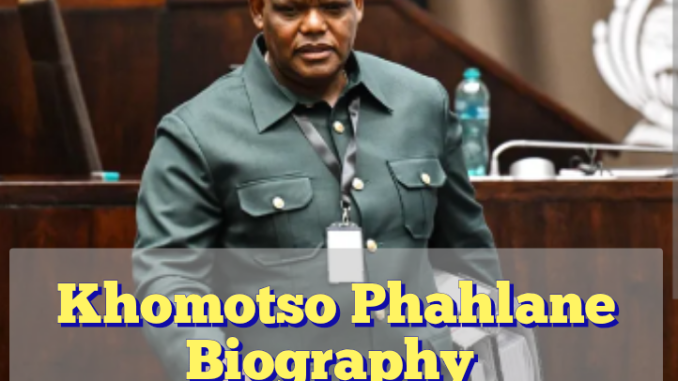
Khomotso Phahlane Biography
Khomotso Phahlane is a well-known figure in discussions about South African law enforcement. He spent many years working for the South African Police Service, or SAPS, which handles crime prevention and public safety across the country. He took on the role of acting national commissioner from October 15, 2015, until June 1, 2017. Before reaching that level, he held positions in forensic investigation and staff management. His career path reflects some of the difficulties faced by the police in South Africa, such as accusations of misconduct and attempts to strengthen the organization.
People often search for information about him because of his part in major developments. He began as an ordinary officer and worked his way up through more than three decades of service. His appointment as acting leader followed the suspension of the previous commissioner, Riah Phiyega. Although recognized for his knowledge in investigations, he later dealt with serious questions related to financial dealings within the police. In 2026, he continues to appear in the media because of ongoing hearings in Parliament about issues in the justice system.
This piece examines his background to give readers a clear picture of his experiences. It includes his beginnings, professional history, important positions, private matters, current events, and a summary with frequently asked questions. By going through this, you will gain insight into the workings of policing in South Africa and the significance of figures like Phahlane. His experiences point to topics such as building public confidence in the police and tackling criminal activity. We begin with his early years.
Khomotso Phahlane Early Life and Education
Public information about Khomotso Phahlane’s childhood is quite limited. He was born and raised in South Africa during a period of major social and political transformation, as the nation transitioned from apartheid rule in the early 1990s. Apartheid enforced racial separation, and the police played a significant role under that system. Phahlane entered the police service in November 1985, just before those major changes took place. This timing meant he started his work in an environment where law enforcement was closely tied to the policies of the previous government.
His academic path centered on subjects useful for police duties and administration. He obtained a National Diploma in Police Administration in 1992, which covered essential knowledge about police procedures and legal compliance. He later earned a Bachelor of Arts in Public Administration, followed by an Honours degree in the same subject, deepening his understanding of government operations. In addition, he completed various certificates in management and business practices, and at one stage pursued a Master’s degree.
These qualifications were valuable because they equipped him for supervisory and leadership responsibilities. In the South African context, police professionals require both hands-on experience and formal education to manage investigations, teams, and resources effectively. His studies during the shift from apartheid to democracy probably influenced his approach to equitable and professional policing. Although specific training locations are not widely documented, his record demonstrates a consistent effort to build expertise.
This educational foundation helps explain his ability to progress within SAPS. Knowledge of public administration assisted him in handling personnel, budgets, and organizational planning—skills essential for senior positions. It also aligns with the post-1994 emphasis on professional standards and responsibility in public institutions. Phahlane’s early education shows the value of continuous learning, particularly in roles that impact community safety and national well-being.
Khomotso Phahlane Recent News
In January 2026, Khomotso Phahlane has once again drawn attention through appearances at parliamentary proceedings. On January 14, 2026, he gave evidence to the Ad Hoc Committee examining national security and alleged corruption within the justice sector. These sessions began following statements by KwaZulu-Natal Police Commissioner Nhlanhla Mkhwanazi regarding possible criminal influence in policing.
During his testimony, Phahlane rejected accusations of corruption leveled against him and described his 2017 removal by Minister Fikile Mbalula as unjustified and improper. He suggested that negative press coverage, rather than solid evidence, drove the decision. He expressed support for Mkhwanazi’s willingness to raise concerns about similar problems.
Phahlane pointed out a payment of R24.5 million for panoramic cameras that were never supplied. He noted that this transaction occurred after his departure in 2017, yet responsibility was placed on him. He accused former IPID director Robert McBride and investigator Paul O’Sullivan of orchestrating a campaign to damage his reputation, partly through media channels. He listed several journalists as participants in this alleged effort.
In a detailed 168-page sworn statement, he outlined incidents starting from 2016, including emails from O’Sullivan calling for certain officials to be removed. Phahlane claimed that O’Sullivan had presented himself as part of official IPID inquiries. The session included some tense moments, with Phahlane requesting additional time and disagreeing with the approach taken by evidence leader Norman Arendse. Several MPs, including Julius Malema, commented on the conduct during the hearing.
He argued that political involvement in police matters increased after the 2007 ANC conference. Phahlane also supported testimony from Cedrick Nkabinde regarding attempts to prevent his permanent appointment as commissioner.
These developments illustrate the continuing discussions about maintaining integrity in law enforcement. Phahlane’s statements emphasize the need for impartial investigations and reduced external interference. For those following South African affairs, this information sheds light on current initiatives aimed at improving transparency and effectiveness in policing.
Recent developments include:
- January 2026 testimony before the Ad Hoc Committee
- Rejection of corruption charges and claims of unfair treatment
- Reference to the R24.5 million unfulfilled tender
- Allegations against McBride, O’Sullivan, and media figures
- Endorsement of Mkhwanazi’s position
Khomotso Phahlane Career
Khomotso Phahlane built a policing career that lasted more than thirty years, beginning at the entry level. He joined the South African Police Service in November 1985 in the position of constable. At that stage, constables carry out routine duties such as street patrols and attending to public calls. Over time, he took on responsibilities including patrol work, security at entrances, and collecting information related to incidents.
With growing experience, he transitioned into detective duties, focusing on examining cases, collecting proof, and supporting legal proceedings. This work sharpened his ability to analyze evidence, which proved useful in later forensic assignments. Prior to 2010, he managed human resources within SAPS, overseeing recruitment, training, and staff deployment. This area ensured that officers received proper preparation and support.
Between July 2010 and October 2015, he served as the commissioner of the Forensic Services Division. This department applies scientific techniques to crime scene analysis, including areas like fingerprint identification and biological evidence. During his leadership, efforts were made to upgrade equipment and methods, contributing to more reliable investigations at a time when crime levels remained high.
His entire career coincided with important reforms in SAPS following South Africa’s democratic transition in 1994. The organization moved toward serving all citizens fairly, and Phahlane participated in training initiatives and forensic improvements that supported this goal. He helped promote ethical standards and modern approaches to policing.
Although he advanced scientific methods and staff development, questions later emerged about certain procurement processes during his forensic tenure. These matters involved contracts for supplies and led to official reviews, though Phahlane has consistently maintained that he acted appropriately.
His professional journey demonstrates persistence and skill development in a demanding field. Rising from basic ranks to senior leadership illustrates the rewards of commitment. At the same time, it draws attention to broader challenges within SAPS, such as strict guidelines for purchasing to ensure proper use of public funds.
Career progression summary:
- 1985: Entered SAPS as a constable
- Early period: Patrol officer, security duties, detective work
- Before 2010: Leadership in human resources and personnel
- 2010–2015: Head of forensic services division
- Total service: More than 30 years by 2017
Khomotso Phahlane Appointments
Khomotso Phahlane held several significant positions that represented important steps in his professional life. On October 15, 2015, President Jacob Zuma selected him to serve as acting national commissioner of SAPS. This decision followed the suspension of Riah Phiyega in connection with events at Marikana. In this capacity, Phahlane was responsible for directing the national police force, establishing guidelines, and managing operations.
His extensive background in forensic work and more than three decades in the service positioned him as a suitable candidate. Initial reactions highlighted his relevant expertise. He remained in the acting role until June 1, 2017, when Minister Fikile Mbalula instructed him to step aside following media coverage of various claims. Phahlane later described this action as lacking legal basis.
Earlier, from 2010 onward, he led the forensic services division, guiding scientific support for criminal investigations. He also managed personnel functions in previous years, focusing on officer training and placement.
These roles reflect both recognition of his abilities and the influence of political factors in high-level police appointments. In South Africa, such positions often involve consultation with government authorities, which sometimes prompts debate about independence. During his time as acting commissioner, he worked on management restructuring to enhance performance.
His formal connection with SAPS ended on August 31, 2020, when he received a dismissal linked to a procurement matter.
These appointments offer lessons about the selection and accountability processes for public leadership roles. Clear procedures help maintain fairness and public trust.
Key positions held:
- 2010: Commissioner of forensic services
- October 15, 2015: Acting national commissioner
- June 1, 2017: Placed on leave
- August 2020: Dismissed from service
Khomotso Phahlane Personal Life
Details about Khomotso Phahlane’s private life remain mostly out of the public eye, as he prefers to keep personal matters separate from his professional profile. He is married, and his spouse has appeared alongside him in some legal proceedings. In February 2018, both faced charges connected to alleged corruption, including claims of receiving benefits such as vehicles from individuals involved in police contracts. Phahlane has firmly denied these accusations, viewing them as attempts to discredit him.
Other reports have mentioned personal claims, including suggestions of extramarital relationships, which he has also rejected. Such topics frequently surface in cases involving prominent individuals, though they often remain unconfirmed.
In public settings, Phahlane tends to emphasize his work rather than private details. He has referred to the importance of family, particularly after stepping away from active service. During a January 2026 hearing, he requested an earlier conclusion to the session for personal reasons.
His situation illustrates that people in visible roles still maintain private lives that can be affected by professional controversies. Managing a high-pressure career in law enforcement alongside family responsibilities presents its own difficulties. This aspect reminds readers that public figures are also individuals with personal circumstances.
Conclusion
The career of Khomotso Phahlane in South African policing combines notable accomplishments with considerable obstacles. Starting in 1985 and reaching the position of acting national commissioner in 2015, he demonstrated strong capabilities in forensic science and organizational leadership. Nevertheless, the accusations he faced and his eventual dismissal in 2020 point to wider concerns within the police service. His testimony in 2026 continues to contribute to conversations about reform and fairness.
His experiences highlight the critical role of integrity in leadership positions. They show how individual effort can lead to progress while also underscoring the necessity for stronger safeguards against misuse. In the South African context, stories like his serve as reminders of the work still needed to ensure an effective and trustworthy justice system. Staying aware of these matters encourages support for open and accountable policing practices.
FAQs
What is Khomotso Phahlane’s career background?
He began with SAPS in 1985, moved through detective and human resources positions, directed forensic services from 2010 to 2015, and acted as national commissioner from 2015 to 2017.
Who appointed Khomotso Phahlane as commissioner?
President Jacob Zuma appointed him acting national commissioner on October 15, 2015.
What happened in the blue lights scandal?
The matter concerned alleged improper handling of contracts for police vehicle lighting and related items during his time overseeing forensic services.
What did Khomotso Phahlane say in recent testimonies?
In January 2026, he denied any wrongdoing, described his removal as unlawful, pointed to payments made after his exit that were wrongly attributed to him, and accused certain individuals of conducting a smear effort.
Leave a Reply